

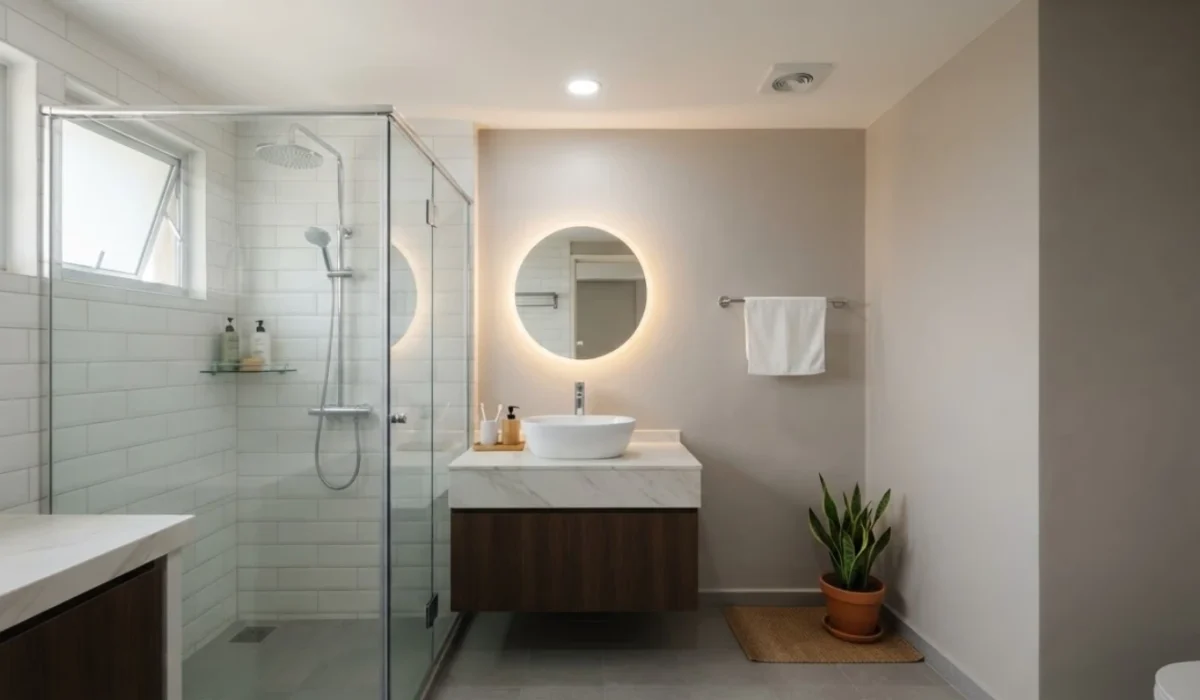
What is the best anti-mould paint for Singapore homes?
The best anti-mould paint for Singapore bathrooms and kitchens is a purpose-built anti-fungal formula such as Nippon Anti-Mould, Gush Care, or Jotun Majestic. These contain fungicidal additives that standard emulsion lacks, which matters in Singapore’s ~84% average humidity, where ordinary paint can show black spots within months.
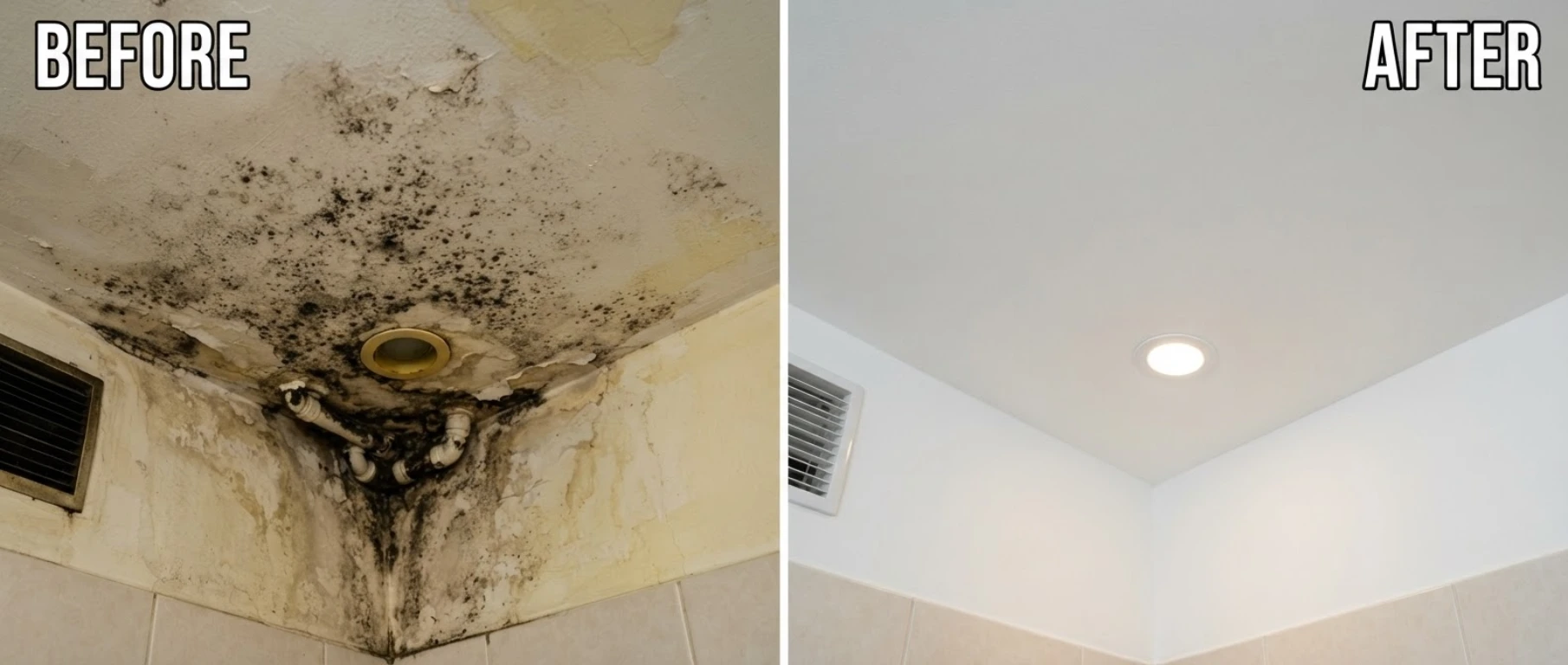
Black mould on bathroom ceilings and kitchen walls isn’t just a cosmetic problem in Singapore — it’s a near-certainty for any surface painted with standard emulsion. Humidity stays high year-round, and wet areas rarely get the ventilation or direct sunlight that would otherwise slow mould growth. Choosing the right paint the first time saves you from repainting the same ceiling every year.
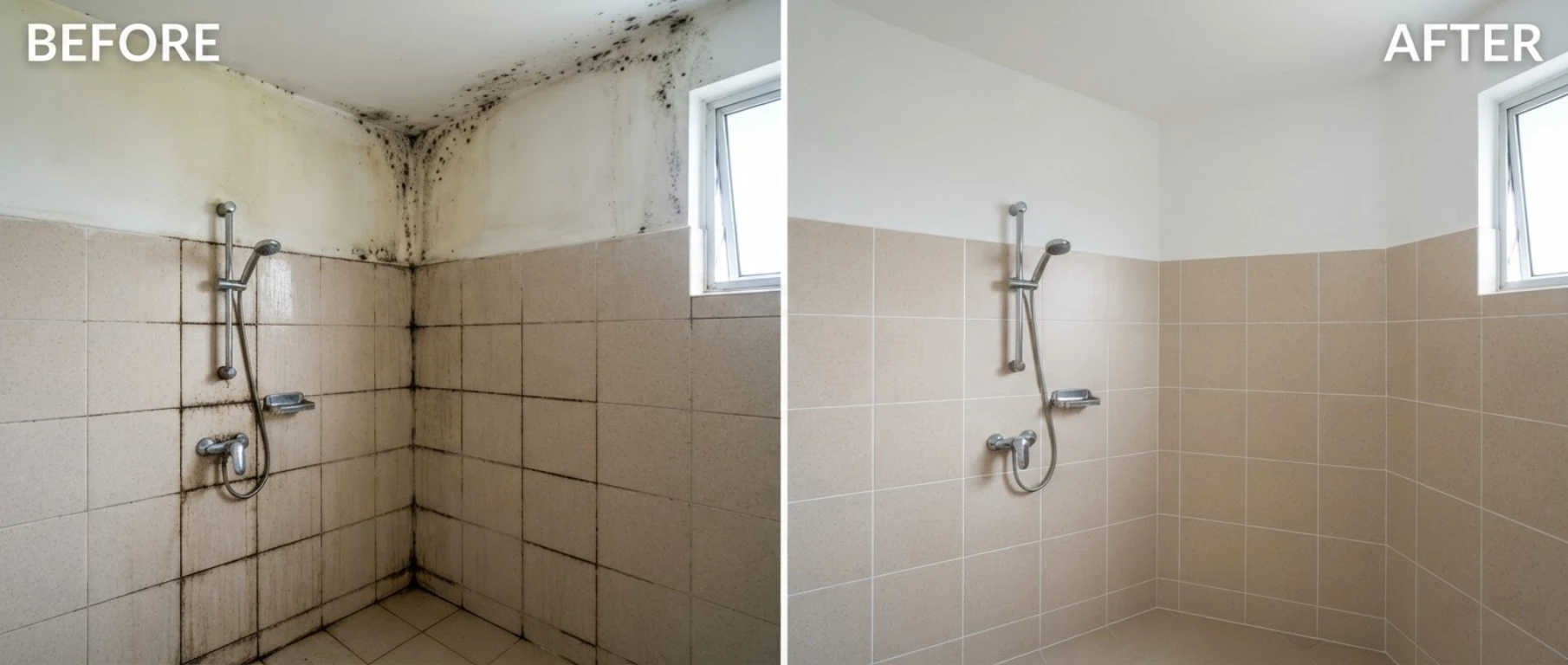
How anti-mould paint actually works
Anti-mould paint isn’t just regular paint with a marketing label. It contains fungicidal and biocidal additives mixed into the formula itself, which continuously inhibit mould spore growth on the painted surface. Standard emulsion has no such protection — it’s simply not formulated to resist moisture and organic growth the way a bathroom or kitchen wall demands.
Three properties matter most in a genuine anti-mould paint:
- Fungicidal additives that actively resist mould and mildew spores
- Water resistance so the paint film doesn’t absorb moisture that feeds mould underneath
- Washability so condensation and light staining wipe off without damaging the finish
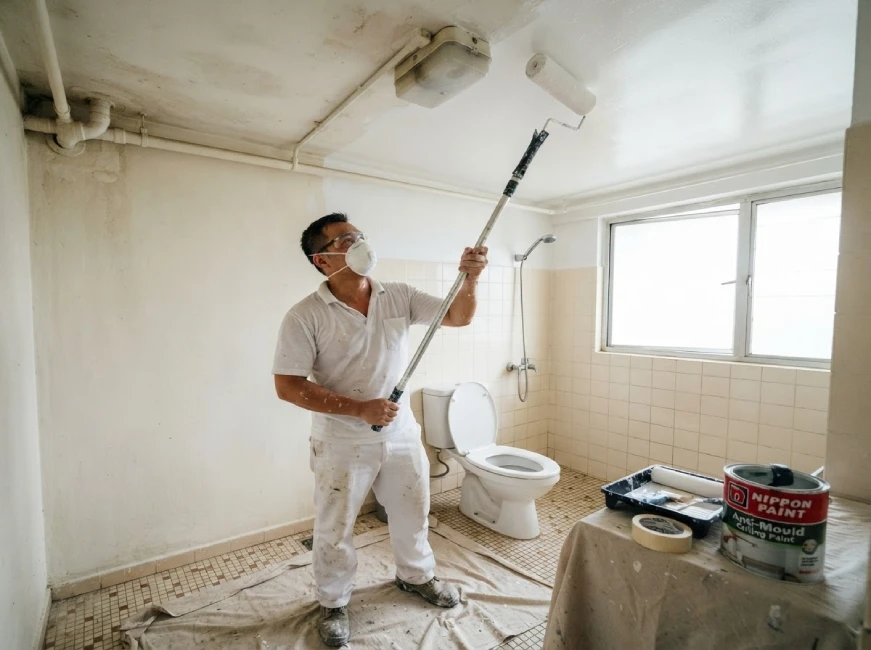
Top anti-mould paint brands in Singapore
Brand | Best For | Notes |
Nippon Anti-Mould | Bathroom ceilings, kitchen walls | Widely used, strong fungicidal formula, available in matte and low-sheen |
Gush Care | High-humidity bathrooms | Singapore-formulated, targets local climate conditions specifically |
Jotun Majestic | Premium finish areas | Anti-bacterial and anti-fungal, smoother finish for visible walls |
All three are genuine anti-mould formulas, not just “washable” paints marketed as mould-resistant — a distinction worth checking before you buy, since some washable paints resist stains but do nothing to stop fungal growth underneath.
Leading Interior Painters Singapore
Call: +65 8200 5622
Where to use anti-mould paint (and where you don’t need it)
Bathrooms and kitchens should always use anti-mould paint — ceilings especially, since heat and moisture rise and concentrate there first. Any wall near a shower, sink, or stove also benefits.
For living rooms, bedrooms, and hallways, standard low-VOC emulsion is usually sufficient, since these spaces have lower humidity exposure and better airflow. Using anti-mould paint everywhere isn’t wrong, but it typically costs more without adding meaningful benefit outside wet areas.
Application tips for lasting mould resistance
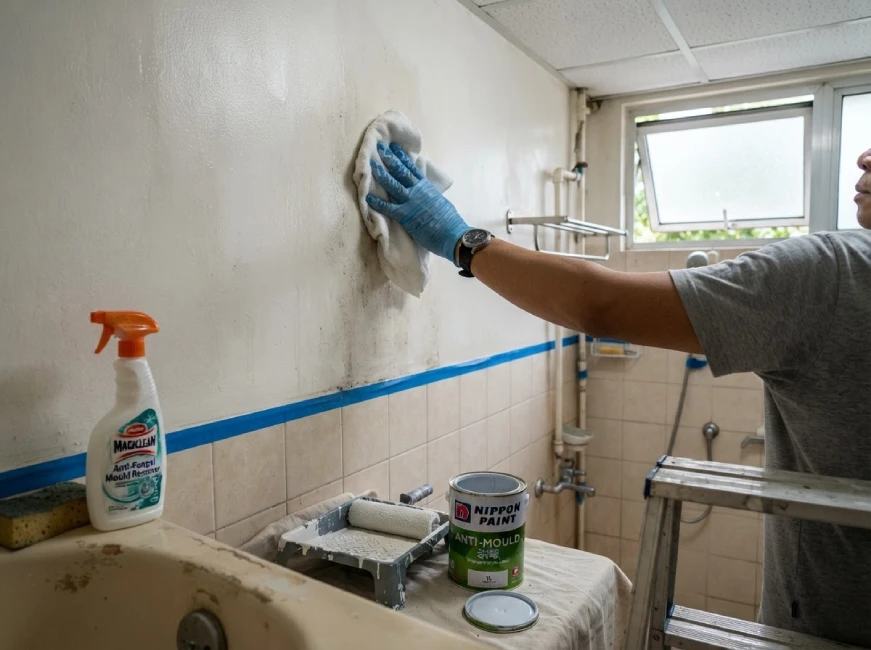
- Clean and treat existing mould first. Painting over active mould growth doesn’t kill it — it just traps it under a new layer, and it will resurface. Use a mould-treatment solution and let the surface dry fully before painting.
- Apply a sealer coat on older walls. If the surface has previously peeled or shown mould, a sealer coat improves adhesion and adds a moisture barrier before the anti-mould topcoat goes on.
- Ensure proper ventilation while painting and curing. Anti-mould paint needs to cure fully to develop its resistance properties — rushing this step in a poorly ventilated bathroom reduces its effectiveness.
- Reapply every 3–5 years in high-humidity areas. Even the best anti-mould paint loses some effectiveness over time in Singapore’s climate, so bathrooms and kitchens benefit from a shorter repaint cycle than the rest of the home.
Frequently asked questions
What is the best paint for a Singapore bathroom ceiling?
A dedicated anti-mould paint such as Nippon Anti-Mould or Gush Care, applied over a sealed, mould-treated surface. Bathroom ceilings face the highest humidity exposure in the home, so this is the one area where anti-mould paint matters most.
Does anti-mould paint really stop mould from coming back?
It significantly reduces mould growth but isn’t a permanent guarantee. Anti-mould paint’s fungicidal properties are strongest in the first few years after application and gradually weaken, which is why a 3–5 year repaint cycle in wet areas is recommended.
Can I use anti-mould paint over existing mould?
No — the mould needs to be cleaned and treated first. Painting directly over active mould traps moisture and organic growth underneath the new coat, and it will typically resurface within months.
Is anti-mould paint more expensive than regular paint?
Yes, typically 20–30% more than standard emulsion, reflecting the added fungicidal formulation. For bathrooms and kitchens, this cost difference is worth it given how much more often untreated walls need repainting in Singapore’s humidity.
Do you supply and apply anti-mould paint?
Yes. We use trusted anti-mould brands including Nippon Anti-Mould, Gush Care, and Jotun Majestic, and can recommend the right option for your specific bathroom or kitchen during a free quote.
Ready to Start Your Anti-Mould Painting Project?
Get a transparent, fixed-price quote from Painting Services Singapore — no hidden costs, no obligation.
Free, No-Obligation Quote
Get Your Free Painting Estimate
Tell us about your project and our team will get back to you with a transparent, fixed-price quote — usually within a few hours.
- Transparent fixed pricing, no hidden costs
- Trained, insured professional painters
- HDB, Condo, Landed & Commercial
- Quality guaranteed on every project
Fill in the form to get your estimate moving.
Book Your Painting Slot Today
Thank You, there!
We've received your request and will get back to you within a few hours with your free, transparent quote. A confirmation has also been sent to your email.